
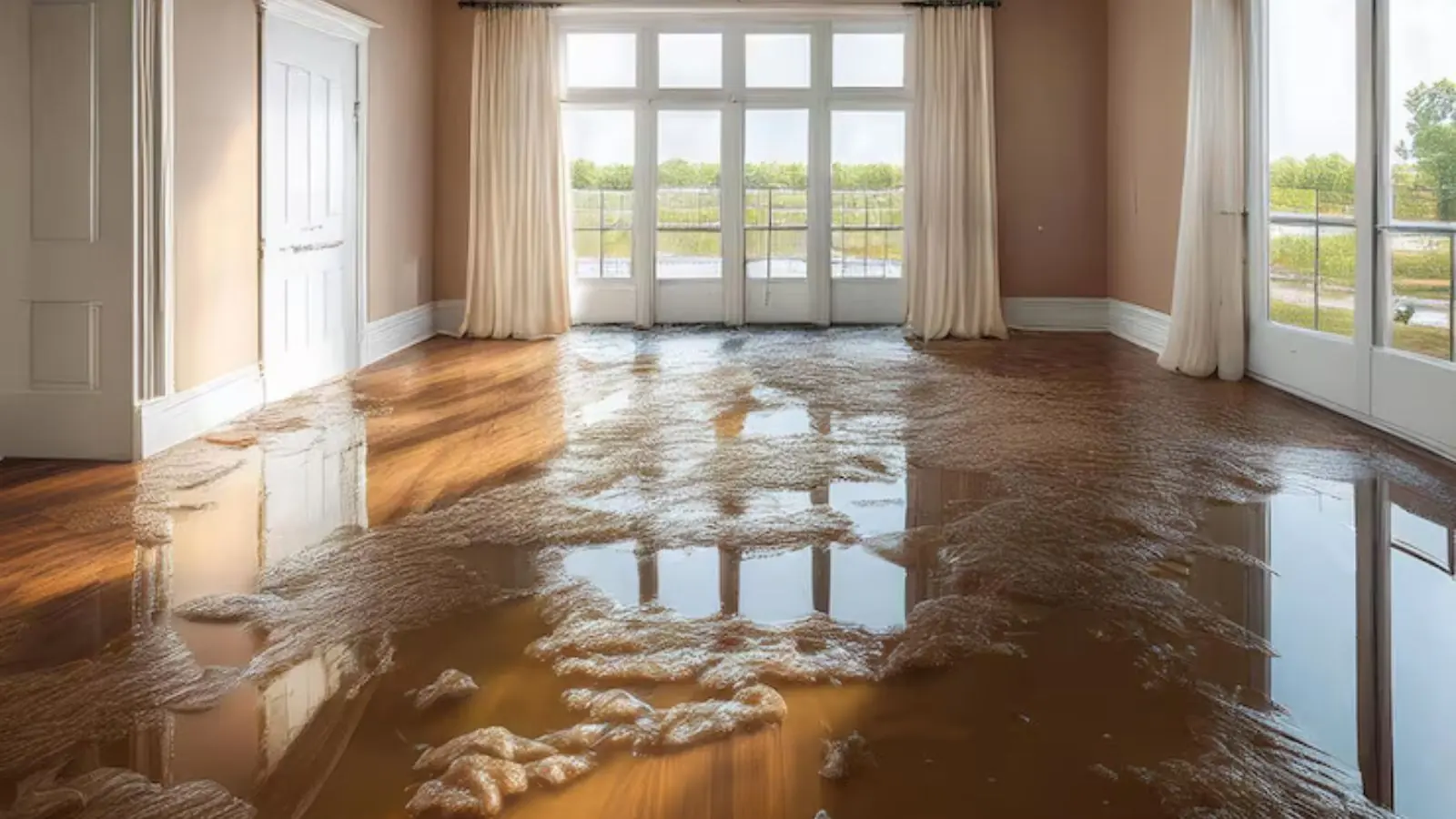
Can wet hardwood be saved? The short answer
Often yes, if the water was clean, the floor was dried quickly and the boards have not yet buckled. Solid hardwood is more forgiving than people fear, because it can release moisture slowly and flatten again. Engineered and laminate floors are less forgiving, since glue and fiberboard layers swell and do not shrink back.
The first few days matter most. Water sits in the seams, soaks the edges and travels under the boards, so a floor that looks only damp on top may be wet through underneath.
Call early, even if the damage looks small. Drying a floor in place is much easier than replacing one, and a technician can meter it to tell you which case you have.
What cupping, crowning and buckling mean
Cupping is when board edges rise higher than the center, forming a shallow trough. It usually means the bottom of the board is wetter than the top, often from moisture below, a leak or a damp subfloor.
Crowning is the reverse, with the center higher than the edges. It often appears after a cupped floor was sanded too early, or when the top surface dries slower than the bottom.
Buckling is the serious one. Boards lift off the subfloor and peak in a ridge, which usually means the floor took in a lot of water and will often need partial replacement.
How different floors react
| Floor type | What water does | What usually happens |
|---|---|---|
| Solid hardwood | Absorbs through edges and seams, cups slowly | Often dried in place if caught early, sanded and refinished after |
| Engineered wood | Veneer and core layers swell | Dried quickly if possible, but swollen boards often need replacement |
| Laminate | Fiberboard core swells and does not recover | Usually replaced if wet more than briefly |
| Luxury vinyl plank | Surface resists water but seams admit it | Planks lifted and dried, subfloor checked underneath |
| Tile over slab | Tile resists water, grout and subfloor may not | Moisture checked beneath, flooring rarely lost |
What to do in the first day
- Stop the water source if you can, and mop or extract standing water.
- Lift rugs, mats and furniture legs off the floor and use foil or plastic blocks under legs.
- Open interior doors and run the air conditioner to keep the air moving.
- Skip the heat gun, the hair dryer and cranked-up space heaters. Fast, uneven drying cracks boards.
- Photograph the floor in daylight, wide and close, with a coin beside any cupping for scale.
- Call the line so a crew can read moisture in the boards and the subfloor.
How crews dry a wood floor
Crews start with moisture meters on the boards and the subfloor, then extract surface water. They set air movers and LGR dehumidifiers, and for solid wood they may add a panel or mat system that pulls moisture through the boards from the top, so the floor dries without being pulled up.
Readings are taken daily, and the equipment stays until the wood and the subfloor return to normal levels. This is the heart of water mitigation, and it is done long before any sanding. Sanding a wet floor locks cupping in.
Afterward, boards that have flattened can be sanded and refinished. Boards that stayed buckled are replaced as part of water damage repair.
Hardwood cupping after the leak has stopped
Floors that cup weeks after a leak are usually still carrying moisture. A technician can meter them and check the subfloor, the crawl space or the slab for a source you missed. The fix often starts with finding where the water still comes from.
Do not sand or refinish until readings are normal. A floor that is flat on Friday can cup again by the next week if it was sanded while the boards were still damp.
Insurance and documentation
A burst pipe or a failed appliance line that lets go all at once is the kind of loss homeowners policies often pick up. Slow seepage under a floor, or a problem left alone for months, frequently falls outside that cover, and rising water from outside generally needs its own flood policy. Read your policy, put the question to your insurer, and hold on to the photos and meter readings from the first visit.
Colton note: river-adjacent properties and storm seasons
Colton's General Plan safety element ties rain-driven flooding mainly to the Santa Ana River corridor and Reche Canyon, and notes that certain river stretches have no certified levee. Cooley Ranch, which lies along the river, is the kind of area where a wet floor should prompt a question about where the water came from.
Floodwater is different from a supply line leak. It can carry silt and contamination, and it changes how floors are handled, because contaminated boards are usually removed and not dried in place.
For 2023, the National Weather Service regional summary lists January atmospheric rivers, March storms and Tropical Storm Hilary in August, mostly across the mountains and foothills. A floor that got wet after a storm should be mentioned to the crew, because it changes the plan.
Nearby towns
Floors in Loma Linda and Grand Terrace follow the same rules. Crews meter the boards, dry the subfloor and explain what can stay.
Frequently asked questions
There is no single deadline. Solid wood can tolerate a short soak if it is dried quickly, but days of wetness lead to cupping, staining and mold. Call early, and let moisture readings decide.
Not before a technician has checked them. Pulling boards can damage tongue-and-groove edges and spread contamination. Crews may lift a few boards to reach the subfloor and leave the rest to dry in place.
Often it does once moisture is gone, but it can take weeks. Wait for stable meter readings before sanding, because early sanding can leave the floor crowned.
Yes. Floodwater counts as contaminated, so affected boards usually come out. Colton's General Plan points to the riverside land as the flood-prone part of town, which is why you should tell the crew if the water came in from outside.
Not always. Boards that dry flat and clean may only need a light screen and recoat, while stained or cupped boards need sanding. A technician can tell you which after the readings are normal.