
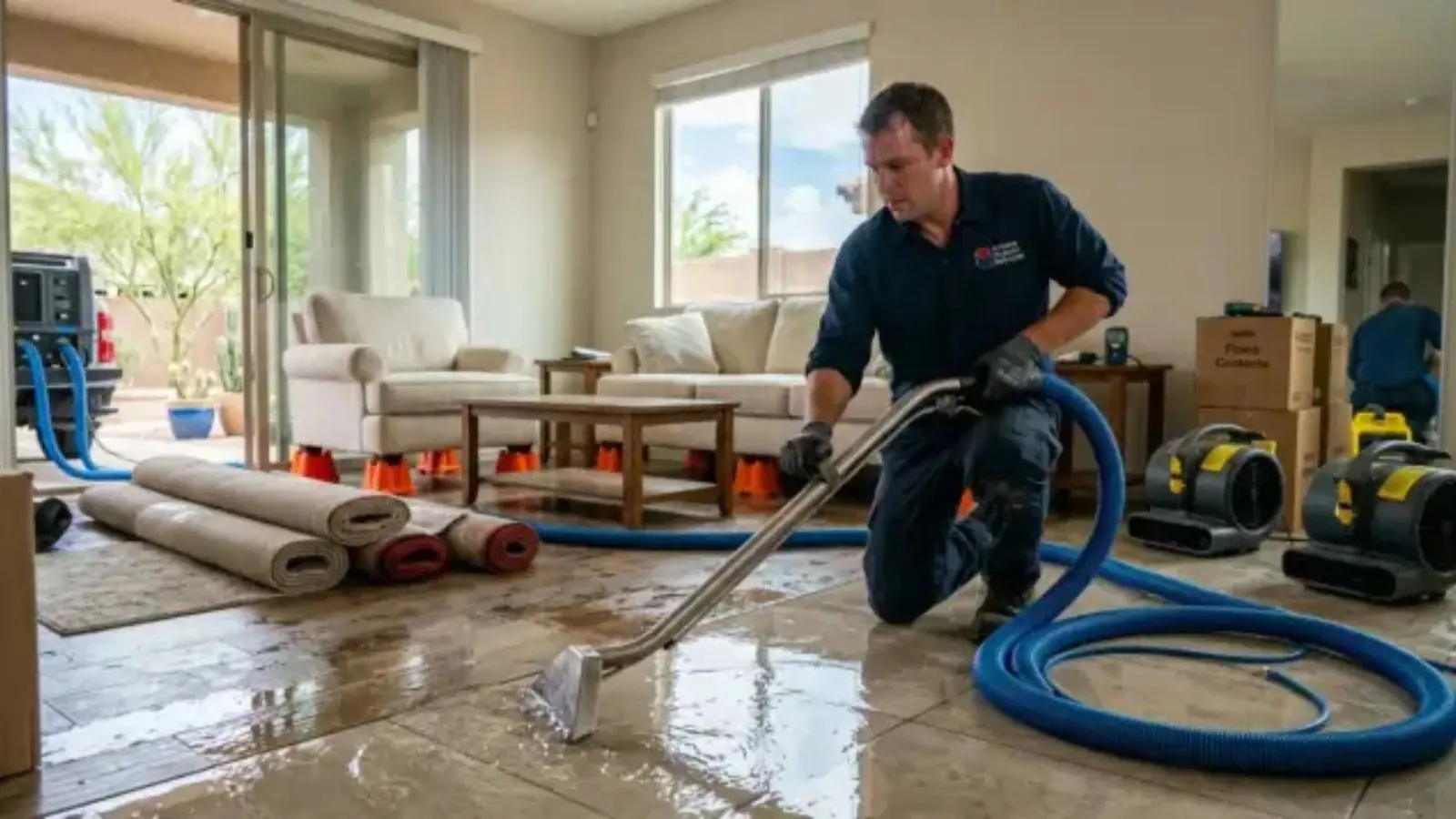
Emergency water removal in Colton, CA means getting standing water out of a building with pumps and extraction units before it soaks into drywall, subfloor and furniture. The sooner the bulk water is gone, the less there is to dry. Our dispatch line answers 24/7, and we send crews the same day when available.
While you wait for the call to be connected, stop the source if you can do so safely. Close the main water valve, lift valuables and electronics off the floor, and keep children and pets out of the water. If water is near outlets, an appliance or the electrical panel, stay out and read the safety block below first.
When standing water is an emergency
Any water deep enough to cover the floor, or still flowing, qualifies. A ruptured supply line under a sink can put a few hundred gallons onto a floor in a single night, and a failed water heater can empty a full tank in the time it takes to notice. Water that sits more than a day starts to wick up walls and swell trim.
Call at night too. After-hours calls are common because overflows happen when no one is watching, such as a washer hose that lets go at 2 a.m. or a toilet that runs while the house sleeps. A same-day response, when available, keeps the loss from spreading to the next room.
Colton has some flood exposure of its own. The city's General Plan names the ground beside the Santa Ana River and Reche Canyon as where flooding from rain is most likely, so if your property sits in either area, watch low spots and garages during winter storm season.
Safety first: electricity, sewage and gas
Before you call the restoration line
If water has reached an outlet, a power strip, an appliance or the electrical panel, keep out of the room. The main breaker is worth switching off only when the box sits in a dry spot you can walk to without wading. When it does not, phone the utility or 911 before anything else.
If you smell gas, leave the building and call 911 or the gas company from outside. If the water came from a toilet or sewer line, treat it as contaminated, keep everyone out and call us immediately.
How standing water is removed
Crews arrive with submersible pumps for deep water and truck-mounted or portable extraction units for shallow water and carpet. Wet vacuums handle corners and stairs. The aim is to take out as much liquid as possible before drying equipment is set.
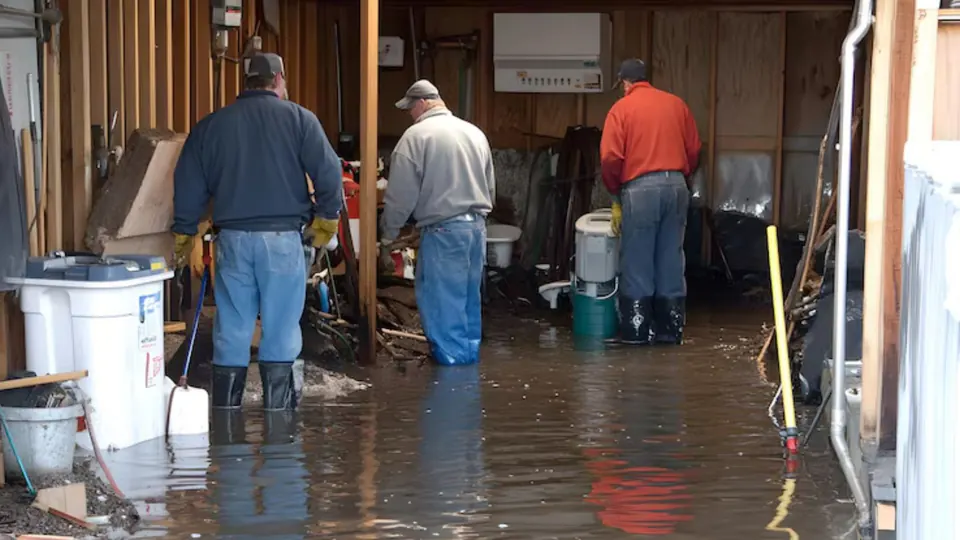
Once the visible water is gone, a moisture meter and a thermal imaging camera show what the surface cannot. Wet pad under carpet is usually removed and discarded, while hard surfaces are extracted and left to dry. Anything that stays damp is handed to the drying stage described on the water mitigation page.
| Situation | First move | Equipment | Usual next step |
|---|---|---|---|
| Inches of clean water on tile or concrete | Stop the source, extract | Portable extraction unit, wet vacuum | Dry baseboards and wall bottoms |
| Soaked carpet and pad | Extract, lift the pad | Truck-mounted extraction, carpet wand | Dry the subfloor and replace the pad |
| Several inches of standing water | Cut power if safe, then pump | Submersible pump, then extraction | Moisture mapping of every room |
| Water that came from a sewer line | Keep out, call immediately | Protective gear, extraction, disinfecting | See flood and sewage guidance |
| Water inside wall cavities | Locate source, open the wall | Extraction tools, thermal camera | Structural drying and repair |
Burst Pipe Water Damage
A burst pipe is the classic emergency removal call. Copper or PEX lines fail at joints, a braided washing machine hose splits, or an old galvanized line pinholes. Find the main water shutoff before anything else, because the quickest way to limit a burst pipe loss is to stop the flow.
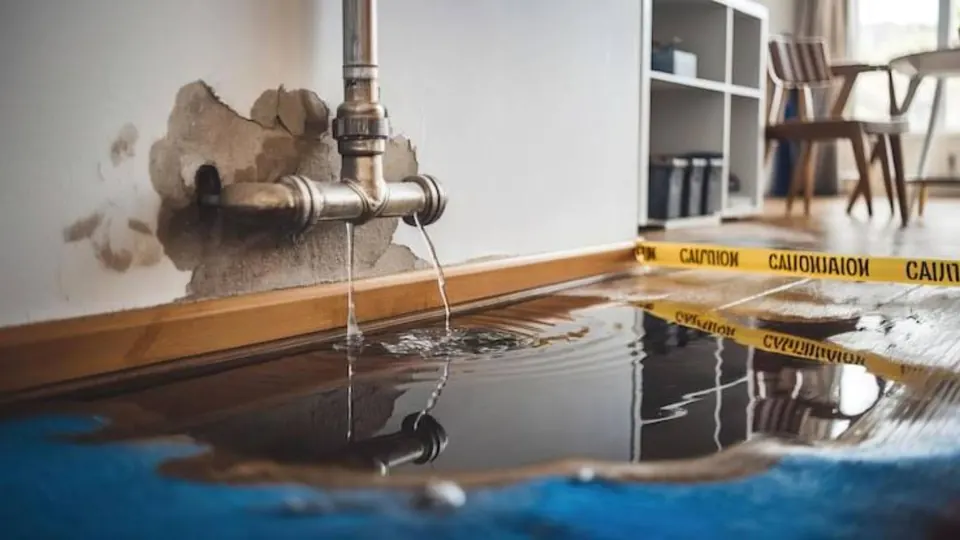
Once the water is off, open cabinet doors under the sink, pull items off the floor and start removing standing water with towels and a wet vacuum if you can do it safely. We then extract what is left, check behind the wall where the pipe runs, and map moisture in the rooms the water traveled toward.
A pipe inside a wall may need an opening cut so the leak can be repaired and the cavity dried. We document the damage with photos and moisture readings, which your insurer is likely to ask for. Burst pipe repair itself is done by a plumber, and we coordinate the timing so drying is not delayed.
Ask the plumber to leave the failed section of pipe with you if possible. Adjusters sometimes want to see how it failed.
What affects the cost of emergency water removal
Water category
Clean supply-line water costs less to handle than gray water or sewage, which needs protective gear and disinfecting.
Volume and depth
A damp kitchen and a room with several inches of water need different pumps and different labor hours.
Materials affected
Carpet and pad, hardwood, laminate and drywall each respond differently, and some must be removed.
Time since the loss
Water that has sat longer has moved further, so more rooms and materials need drying.
Equipment and visits
Pumps, extraction units and later drying equipment add to the scope, and monitoring visits depend on the building.
Nobody can price a flood from a doorway photo, so the number comes after we know the volume and what got wet. Call and describe the water to start that conversation.
Insurance notes for a sudden water loss
Policies tend to respond when a pipe bursts or an appliance fails without warning, and tend not to respond when a slow leak was ignored. Outside floodwater is excluded from most homeowners policies, so it takes a flood policy. The California Department of Insurance tells homeowners to let their insurer know about water damage right away.
Take photos before moving anything, keep receipts, and ask your insurer what applies to your policy. We cannot promise coverage.
What to do while you wait
- Shut off the main water valve. Know where it is before an emergency happens.
- Switch off the breaker for wet areas only when the panel is in a dry spot you can walk to.
- Lift furniture, rugs, electronics and paperwork off the floor.
- Photograph the water, the source and any damaged belongings.
- Open windows if weather allows, and keep children and pets away from the water.
Crews for Colton and nearby towns
We dispatch around the clock to Colton, ZIP 92324, and to neighboring communities. If you are in the next town north, see our San Bernardino emergency page.
After the water is out, water damage cleanup covers sanitizing, and water damage repair handles rebuilding. Large storm or river events fall under flood damage restoration. Call now for a same-day response when available.
Frequently asked questions
Yes. Nights, weekends and holidays go to the same 24/7 dispatch desk as weekday calls, and a crew goes out the same day when one is free.
Call as soon as you find the water, because after-hours callers get the same service as weekday callers.
Close the main water valve, lift valuables off the floor and keep people away from the water. Switch off power only if the panel is dry and reachable, and call the utility or 911 for any electrical or gas risk.
Submersible pumps handle deep water, and truck-mounted or portable extraction units remove the rest from floors and carpet. A moisture meter and thermal camera then show what is still wet.
The price depends on water category, volume, materials and time since the loss. It is set after dispatch hears the details and explained before work begins.
Removal takes out the standing water. Mitigation includes drying structure, setting equipment and monitoring until readings are normal.
A sudden burst is often covered under a homeowners policy, while slow leaks often are not. Check your policy and ask your insurer, since coverage varies.