
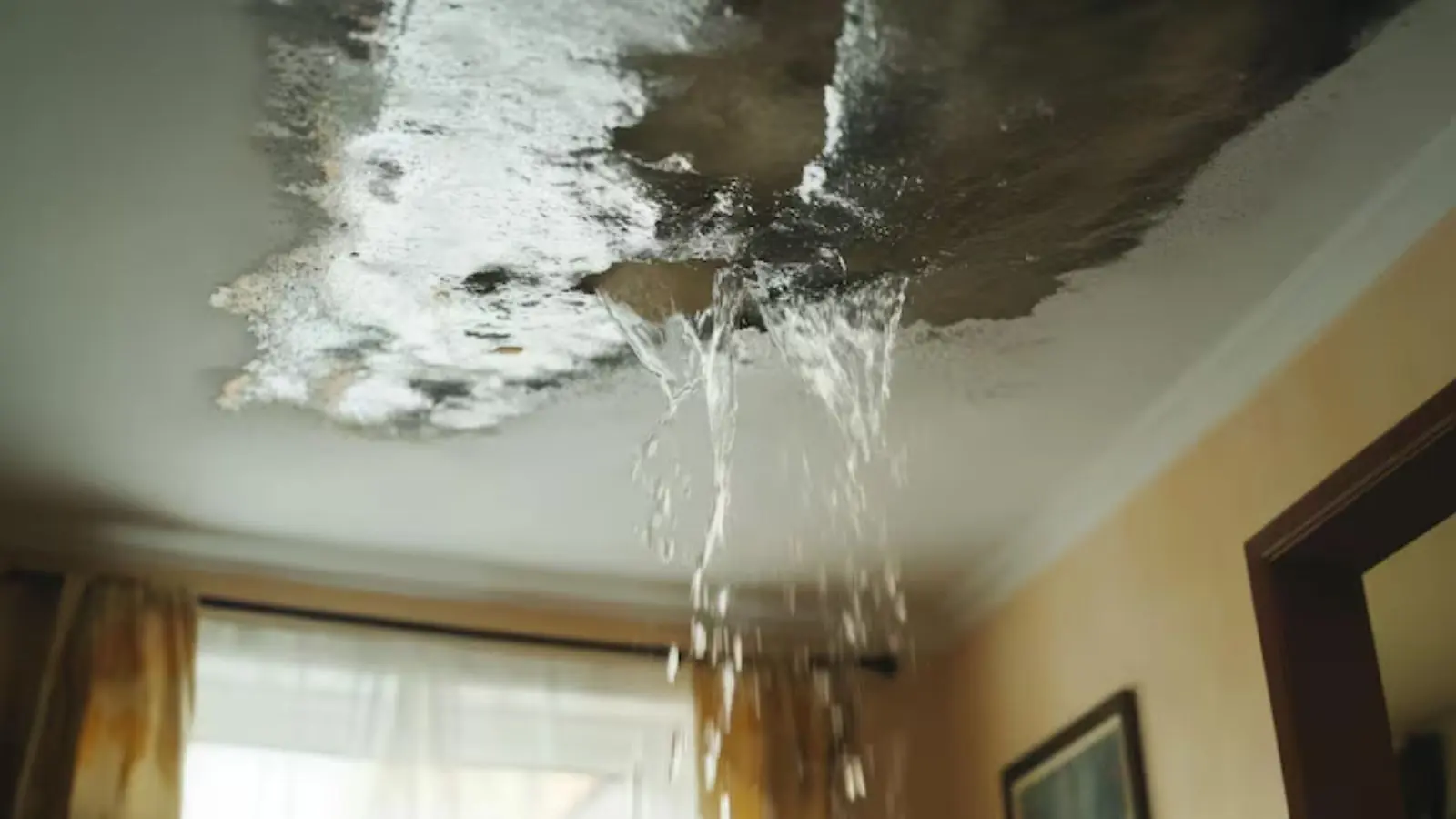
The short answer: stay out from under it
A ceiling that bows, bulges or has already dropped is holding water, and a wet drywall panel weighs far more than a dry one. Keep people and pets out of the room and do not stand under the low spot. If the sag sits below a bathroom, a roof or an upstairs unit, assume more water is still arriving.
Shut off the main water valve if a pipe is the source. If the roof is the source, move furniture and valuables out of the way and call the 24/7 line for emergency water removal, so a crew can bring extraction gear and look at what is sitting above the ceiling.
The rest of this guide explains why ceilings fail, what to do in the first hour, and how the drying and rebuild work.
Why a leaking ceiling sags and then fails
Drywall is gypsum pressed between paper faces. When water pools above it, the paper and the core soften, the panel loses strength, and the screws holding it start to pull through. A panel that looked fine in the morning can drop that evening under its own wet weight, often with soaked insulation on top of it.
The visible stain is rarely where the leak starts. Water runs along joists, pipes and the top of the drywall until it finds a low point, so a bulge near a hallway light may trace back to a tub two rooms away.
Insulation above the ceiling behaves like a sponge. It holds water against the drywall long after the source stops, which is why a ceiling can sag hours after the dripping seemed to end.
What to do in the first hour
- Clear the room. Keep everyone out from under the bulge, and close the door if the ceiling has cracked across a wide area.
- Stop the source. For a supply line, toilet or water heater, close the main valve or the local shutoff. A roof leak cannot be stopped from inside, so skip to the next step.
- Think about electricity. Light fixtures, fans and outlets in a wet ceiling are a shock risk. Shut off the breakers serving that room only when the panel is dry and you can get to it without wading through water.
- Take photos and a short video from a safe angle before anything is moved. Wide shots first, then close ones of the bulge, the stain edges and anything that has fallen.
- Move furniture, rugs and electronics away from the area, and set out buckets only where it is safe to stand.
- Call the 24/7 line and describe what you see, where the water likely comes from and whether anyone smells burning or hears buzzing.
Electrical or gas risk comes first
If you see sparks, hear buzzing, smell burning or smell gas, leave the area and call 911 or the utility before you call a restoration line. Water and a live circuit are a serious combination, and no ceiling is worth the risk.
Should you drain a bulging ceiling yourself?
A bulge full of water can sometimes be relieved with a small hole at the lowest point, so the water runs into a bucket instead of dumping at once. It is a judgment call, and it is safest left to a crew that works from a ladder with eye protection and a plan for the wet insulation behind the panel.
If you decide to do it anyway, never stand directly beneath the bulge, use a long tool, wear eye protection and clear the floor first. Skip it near light fixtures, when the ceiling is cracked across a wide area, or when the panel is already tearing. Waiting for help is better than a face full of insulation and water.
Reading what you see
| What you see | What it usually means | Sensible next step |
|---|---|---|
| Brown stain, dry to the touch | Water reached the ceiling earlier and has stopped or slowed | Outline the edge with a pencil, date it, and call if it grows or the room smells damp |
| Soft spot or small bulge | Water is pooled above the drywall | Clear below it, stop the source and call the same day |
| Sag with active dripping | A live leak is still feeding the ceiling | Treat as an emergency, close the room, shut off water, call now |
| Panel down, insulation exposed | The ceiling has failed under wet weight | Stay out, photograph from the doorway, call the 24/7 line |
| Musty smell, no visible stain | Hidden wetness in the cavity | Ask for moisture mapping, and see mold remediation if growth is visible |
How crews handle a failed ceiling
Crews begin by checking the room for electrical hazards, then map moisture with a meter and a thermal imaging camera, which shows cool wet areas behind a surface that looks dry. Wet drywall and insulation that cannot be saved are cut out in sections and bagged, so nothing else comes down on the way.
Once the wet material is out, the cavity is dried with air movers and LGR dehumidifiers until readings return to normal. That drying stage is what water mitigation means in practice, and it is where most of the mold risk is won or lost.
Rebuilding follows drying. New insulation, drywall, texture and paint fall under water damage repair, and the scope depends on how much of the ceiling was wet. Before work begins the crew explains the scope, and the price turns on the wet area's size, the insulation involved, access from above and how many rooms are affected.
Insurance and photos
A homeowners or renters policy often responds to sudden, accidental water damage, but a leak that dragged on for weeks or months often is not covered. Your policy and your insurer can tell you which category the loss falls into, so read the first and call the second. Photos taken before cleanup, a note of when you first saw the sag and the source of the water all help that conversation.
California's Department of Insurance advises telling your insurer about water damage immediately, so make that call before the repair estimate arrives.
Colton note: the city utility behind the leak
According to the City of Colton service providers page, water, sewer and electric service in Colton all come from the city. For a wet ceiling that means the shutoff, the power question and the billing account sit with one utility, which is a useful thing to know when you are standing in a dark hallway with a bucket.
If you smell burning, see sparking or lose power to part of the house after a ceiling leak, contact the city utility or 911 first. Tell the restoration dispatcher what you found when you call, so the crew arrives with the right plan.
Renters in an apartment should also tell building management at once. A sag under an upstairs unit often comes from a neighbor's pipe, and management controls access to the unit above.
If you are calling from outside Colton
Dispatch covers Colton and the towns next to it. Homeowners in San Bernardino and Loma Linda report the same pattern after rain or a pipe failure, a stain first and a sag later, and the steps above apply unchanged.
Frequently asked questions
Sometimes a small, firm bulge dries and holds. Once the drywall is soft, cracked or stretched, it usually has to be cut out because it will not regain its strength.
A crew checks it with meters and by touch, then decides what stays and what goes.
Mold can begin to grow in a day or two on wet material, which is a commonly cited range. Wet insulation above the ceiling is the usual hiding place, so fast drying matters more than a quick paint-over.
Leave the switch alone if your hands or the floor are wet. Cut the breaker for that room only when the panel is dry and reachable without crossing water. If anything buzzes, sparks or smells hot, leave and call 911 or the utility.
Because electric service in Colton comes from the City of Colton, contact the city utility for service issues and 911 for sparks, smoke or fire. Call the restoration line once the area is safe.
A sudden burst pipe or storm-driven roof leak is often covered, while long-term seepage often is not. Read your policy and ask your insurer, and keep photos of the ceiling before anything is thrown away.