
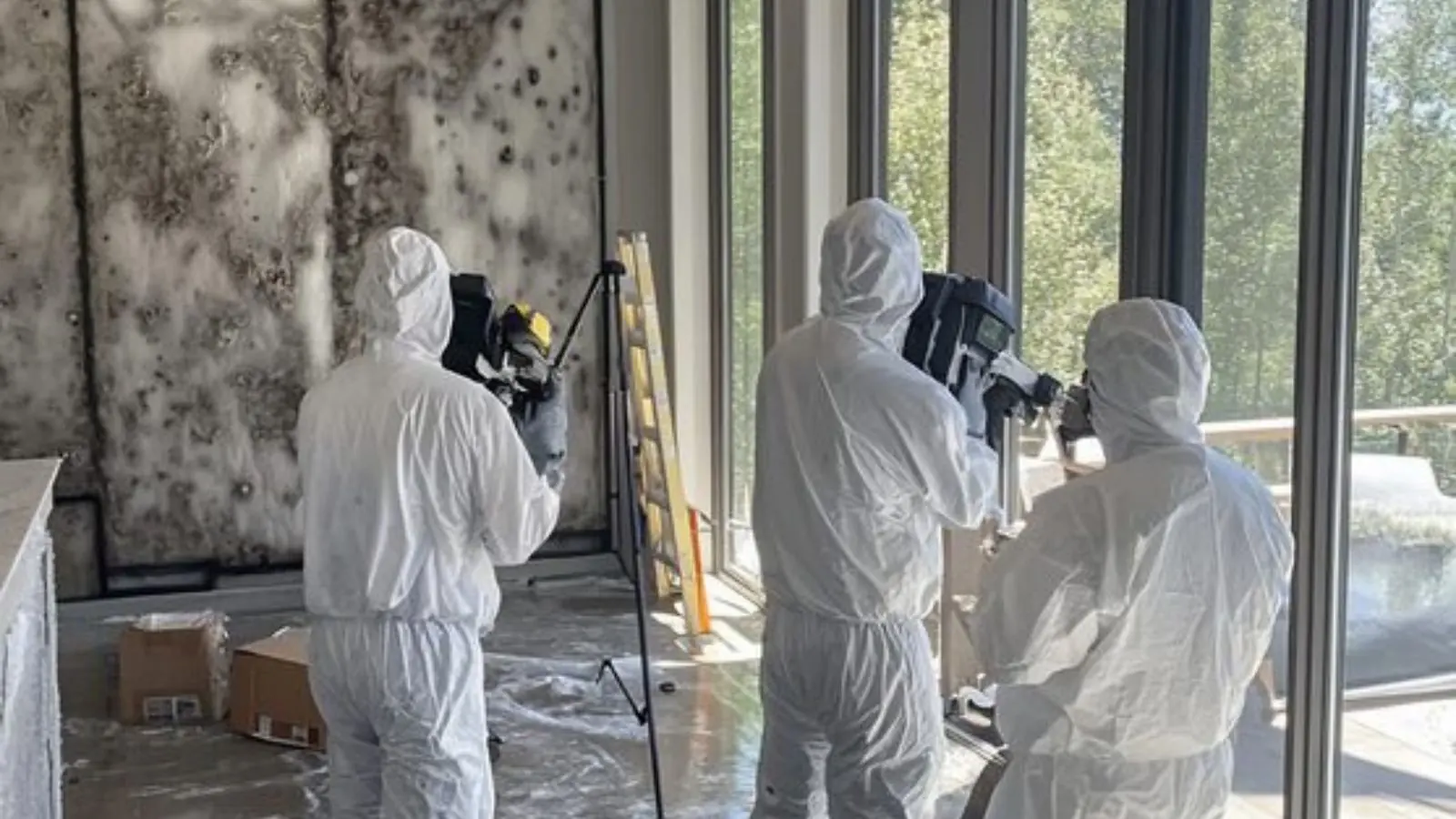
What clearance testing actually is
Clearance testing is a verification step done after mold has been removed and the area has dried. A tester takes air samples, surface samples or both, and compares them with the plan written before cleanup began. The result is a short report that a buyer, seller, landlord or lender may ask to see.
It is not the cleanup itself, and it is not a certificate that a house is perfect. It documents the condition of one defined area on one day. In a Colton sale, that paper often matters more than the cleanup invoice, because the buyer's agent reads the report and the invoice sits in a folder.
If you are still trying to confirm whether a stain is mold at all, start with a mold remediation assessment before thinking about clearance. Clearance only makes sense once there is a cleanup to clear.
Why the tester should not be the person who did the cleanup
The cleanest arrangement keeps two roles apart. One party writes the plan and tests afterward. A different party does the removal. When a single company writes the protocol, performs the work and then grades it, a reader has no way to know whether the test was hard to pass.
Mold inspectors and cleanup crews hold no California license or certificate for that work, a point the state's Department of Public Health makes plainly. A title on a business card therefore tells you little. Ask what training the person has, ask which written standard the work follows, and ask for sample report pages before you hire anyone.
Published industry guidance exists. ANSI/IICRC S520 is the written standard for mold remediation, and crews can be asked whether they follow it. A reasonable company answers plainly and explains how containment, removal and drying were handled.
The stages, and who produces what
| Stage | What happens | Paper you should end up with |
|---|---|---|
| Assessment | A visual check, moisture readings and sometimes sampling to find the source and the extent | Written findings with photos, moisture readings and a map of the affected rooms |
| Protocol | The scope of removal, containment and drying targets are written down before work starts | A plan the remediation crew signs onto |
| Source repair | The leak, condensation line or roof opening that fed the mold is fixed | A plumber or roofer invoice that names the repair |
| Remediation | Affected material is removed and surfaces are cleaned and dried under containment | A work summary and drying records |
| Clearance | Visual inspection and sampling by the assessor after cleanup | A clearance report that references the original protocol |
The source repair line is the one people skip. A clean report on a wall that is still taking in water will not hold. If the moisture source is a roof leak or a toilet supply line, the repair invoice belongs in the same folder as the test.
A realistic order of events for a Colton sale
- The buyer's inspector notes a stain, odor or moisture reading and recommends a specialist.
- A specialist looks at the area, finds the water source and writes findings. Nothing is torn out yet.
- The seller fixes the leak first, then a separate crew carries out the written scope.
- The assessor returns after drying and runs the clearance check against that scope.
- Everyone involved reads the final report, and the escrow officer or the lender decides what it needs.
Steps two and three can overlap in practice, but the order matters. Removing material before anyone has written down what was there makes the final comparison harder to defend.
Be careful with timelines in your own contract. Drying and sampling take real days, and lab turnaround is not something a crew controls. Build in slack rather than promising a close date that depends on a sample result.
What the report can and cannot tell you
A good clearance report says what was inspected, what samples were taken, where, and how the result compares with the pre-work conditions. It can say the work area is visually clean and that readings match the plan. That is a useful statement about a defined space.
It cannot predict the future of the house. If the roof is still open or a condensation line still drips, a clearance report from last month says nothing about next winter. It also cannot speak for rooms that were never tested, so ask that every room named in the findings appear in the final report.
Lenders and escrow officers set their own conditions. Ask them directly what documents they want and in what form, rather than assuming a particular report will be accepted. This site cannot tell you what any lender will approve.
Questions to ask before you pay for testing
- Will the assessor and the remediation crew be two different companies?
- Is the plan written before work begins, and will I receive a copy?
- Which rooms and which materials does the final report cover?
- How will the report describe the moisture source and its repair?
- What does the lab report contain, and who explains unclear numbers to me?
- Who keeps photos and drying records, and can I have them for the sale file?
If you want the water side handled first, water mitigation covers drying a wet structure before mold has a chance to form. When a sale deadline is close, that earlier step is usually cheaper than any cleanup that follows.
Colton facts that matter for a sale
Owners hold just over half of Colton's homes, with renters close behind. Census QuickFacts lists the owner-occupied rate at 52.8 percent for 2020 to 2024, with a median owner-occupied value of $443,800. At that value, a documented mold history can change a negotiation, so keep every invoice and report together.
Under California rules, a state contractor license is required once a job reaches $500 or more, and the Department of Public Health notes the state has set no rules for mold inspection or cleanup. So ask any remediation contractor which license it holds for the work and check it yourself, because mold assessment itself carries no state credential.
California Department of Insurance guidance tells homeowners to notify the insurer of water damage promptly, and to reach the adjuster at once when mold is suspected. It adds that mold stemming from a covered cause of loss may be covered. Read your policy, ask your insurer, and photograph everything on day one.
Buyers and sellers here often cross town lines, so the same questions come up in San Bernardino and Loma Linda, where each city runs its own permit office. Inside Colton, permits for rebuilt walls or replaced electrical or plumbing work are sorted out at the Building and Safety counter, and whether one applies depends on the scope.
Frequently asked questions
No. Small, clearly surface-level jobs often finish with a visual check. Testing becomes more useful when a sale, a lease dispute or a lender will read the paperwork, or when the work area was large or hidden inside walls.
Decide before work starts, because the plan written at the start is what the test compares against.
That is a negotiation between the parties and is normally written into the purchase agreement or a repair addendum. Ask your real estate agent or escrow officer how the contract assigns it, because we cannot set it for you.
It can, but a separate assessor gives a reader more reason to trust the result. Many buyers and lenders look more kindly on a report from a party that did not profit from the cleanup. Ask each side which arrangement the other party will accept.
The site visit is usually short, but drying must be finished first and lab results take extra days. Treat any close date that depends on a lab result as flexible, and ask the assessor for an honest turnaround before you set deadlines.
Keep the plumber or roofer invoice, the original findings with photos, the written scope, drying records and the final report. Store them as one folder, because a buyer will ask for the whole story, not only the last page.