
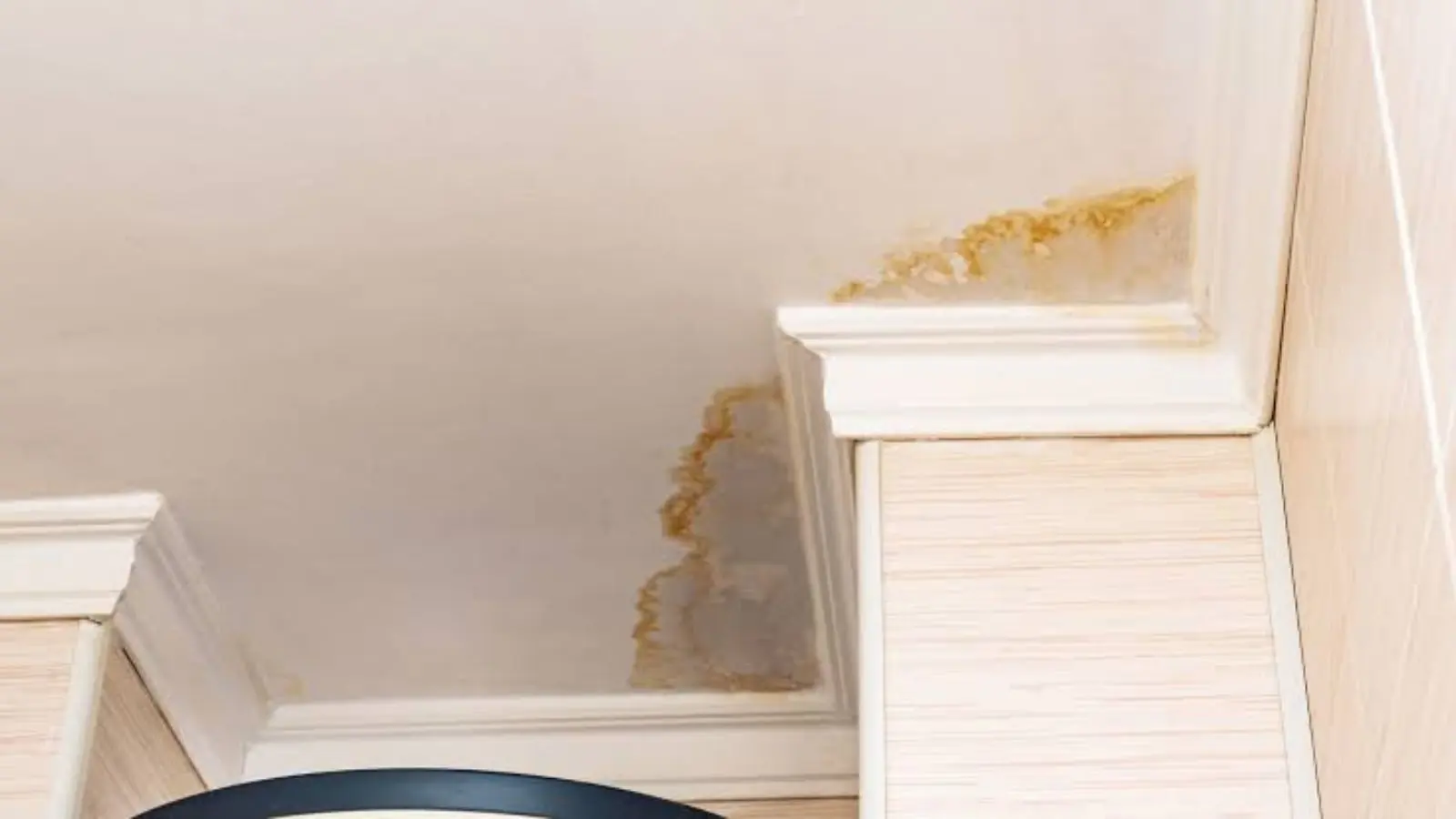
Is the stain old or still active?
Most minor ceiling stains fall into one of two groups: a one-time event that is already dry, or a slow leak that is still feeding the spot. The difference decides if a can of primer is enough or if you are about to paint over a problem.
Start with a pencil. Trace the outer edge of the stain, write the date beside it, and look again after a rainy day and after someone has run the shower upstairs. If the ring grows, the leak is live. If the line stays put for a week, it is probably finished.
Then press a flat hand on the stain. Cool, soft or slightly spongy drywall means moisture is still inside. A hard, dry surface with a clean edge points to an old leak that has already stopped.
What the stain color and texture can tell you
| What it looks like | What it often points to | What to do |
|---|---|---|
| Tan or brown ring with a darker outer edge | Water that arrived, dried and arrived again | Find the source, then check with a moisture meter before painting |
| Yellow patch with no clear edge | A slow seep, often from a joint or fitting | Look above the spot for plumbing or a roof penetration |
| Bubbling or peeling paint | Moisture trapped behind the paint film | Do not paint over it, the drywall needs to dry first |
| White powder or crust | Minerals left behind as water evaporated | Source may be fixed, but confirm the area is dry |
| Dark spots or fuzzy growth | Moisture has stayed long enough for growth | Stop cleaning, see mold remediation |
Finding where the water came from
Water travels, so the stain is a clue and not an address. Check the room above first. A bathroom, laundry, kitchen or water heater closet above a stain is the usual suspect, followed by a roof or an air conditioner.
Air conditioner condensate lines are an overlooked cause, because the drain can clog and overflow slowly for weeks. If the stain sits near a vent, a hallway closet or an attic hatch, look at the drain line and the drip pan first.
For a single-story house, climb to the attic if it is safe and look for damp insulation, dark wood or a trail of rust on nails. If you cannot find the source, a technician with a thermal imaging camera and a moisture meter can trace it without opening the ceiling.
When a DIY fix is reasonable
A small, dry stain with a known and repaired source is a normal cosmetic job. Confirm the drywall is dry and firm, scrub gently with a damp cloth, and let it dry fully.
Seal it with a stain-blocking primer before the topcoat. Ordinary paint alone lets tannin and mineral stains bleed through, and the ring comes back within a few weeks.
- The stain is smaller than a dinner plate and has not grown in a week.
- The drywall is hard, flat and dry in every part of the stain.
- The leak was repaired and you saw it stop.
- There is no musty smell and no dark or fuzzy growth.
When paint is the wrong answer
Call for help when the stain keeps growing, when the surface is soft or bulging, or when the room smells damp. Those are signs that water is still inside the ceiling, and sealing it in only gives mold a closed, dark space to work in.
A technician can check the cavity with meters and a thermal imaging camera, and decide whether the area just needs water mitigation to dry or if damaged drywall has to be replaced. When a stain appears in more than one room, the problem is often bigger than a single leak.
Before work begins the crew explains the scope, and the cost turns on the size of the wet area, the materials involved, how many days of drying are needed and how much rebuilding follows.
Insurance and the first notice
Sudden and accidental water damage is often covered, and slow leaks that were ignored often are not. Whether your stain qualifies depends on your policy, so check it or ask your insurer. Photograph the stain before you clean or paint it, because a clean ceiling is hard to explain later.
Colton note: many households rent
Census QuickFacts for Colton show an owner-occupied housing rate of 52.8 percent for 2020 to 2024 and a median gross rent of $1,661. That means roughly half of Colton households rent, and a ceiling stain is often a landlord's repair as much as a tenant's.
Renters should photograph the stain, tell the landlord or manager in writing the same day, and keep a copy of the message. If a neighbor's unit is above you, management has to be the one to open that unit, so an early written report saves time.
Owners get the same benefit from a dated record. A pencil line, a photo and a date show what the ceiling looked like when you noticed it, which helps the technician and your insurer.
Calling from nearby towns
Crews work in Grand Terrace and Rialto as well as Colton, and the same stain checks apply in any of them. A stain that grows after rain points to the roof, while one that grows after a shower points to plumbing.
Frequently asked questions
Only if the area is fully dry, the source is fixed and the drywall is firm. Use a stain-blocking primer first, because regular paint often lets the ring show through again. If the stain keeps coming back, water is still reaching it.
Watch it for about a week, including at least one rain or one heavy shower use. Mark the edge in pencil with the date. A ring that does not move across that period is probably finished, but a damp feel means it is not.
No. Many stains are only discolored paper and minerals. Mold is a separate question, answered by smell, texture and growth, and by testing where needed. A physician is the right person for any health question.
That depends on your lease and the cause, so read the lease and tell your landlord in writing the same day. Keep photos and your message. Do not paint over the stain before the landlord has seen it.
A technician uses a moisture meter to read the drywall and a thermal imaging camera to spot cool, wet areas behind a dry surface. These tools show whether a stain is dry history or a live leak without cutting a hole.