
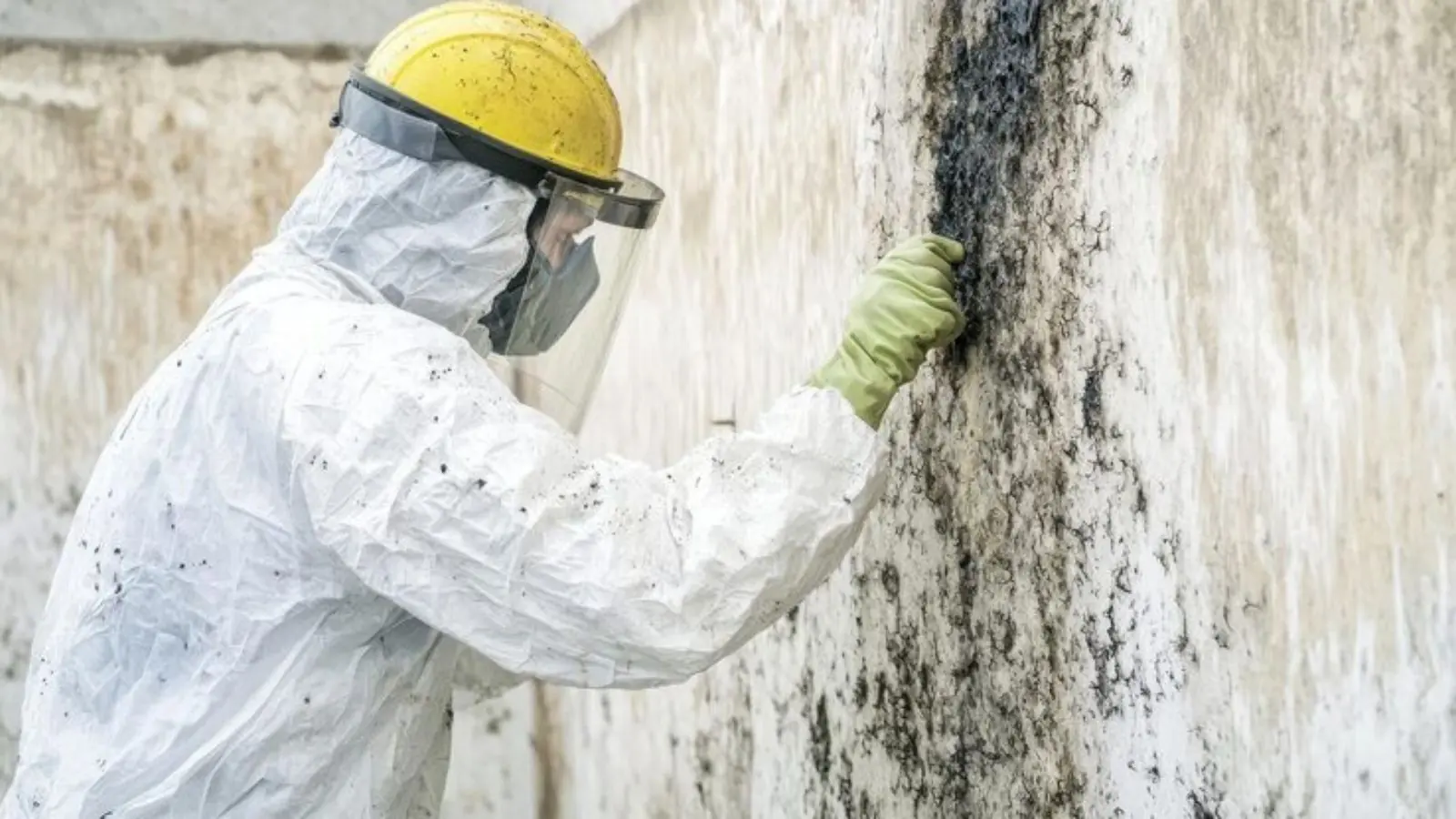
First, what the phrase black mold really means
People use the words black mold for any dark, spotty growth on drywall, grout, caulk or wood. Color alone cannot identify a species, and a lab is the only way to name what is growing. A gray, green or brown patch can be just as significant as a black one.
What matters for the cleanup decision is how much material is affected, how long the area stayed wet, and whether the growth sits on a surface or inside a cavity. Those three facts drive the plan, not the paint color of the stain.
This post makes no medical claims. If anyone in the household has symptoms they connect to a damp space, that question belongs to a physician, and a restoration company is not the right source for it.
Where home cleaning is reasonable and where it stops
A small patch on a hard, non-porous surface such as tile or a glazed tub surround can often be cleaned by the household. A thin film on a window frame after a humid week is a nuisance, not a project. Soap, water, a stiff brush and drying afterward are the basics.
Porous material changes the picture. Drywall paper, insulation, carpet pad and ceiling tile absorb moisture, and mold grows into them. Wiping the face does not reach what is inside, and painting over the stain hides it without addressing the damp material under it.
| What you see | Home cleanup is a fair start if | Bring in a professional when |
|---|---|---|
| Spots on tile or grout | The patch is small and the surface is hard | The spots return within weeks, which points to a leak or poor drying |
| Stain on painted drywall | The stain is small, dry and the source is fixed | The wall is soft, bulging, smells musty or the stain keeps spreading |
| Growth on ceiling | Never a home project if the ceiling is wet | Almost always, because the leak and the insulation above need attention |
| Growth under carpet or in a closet | Rarely suitable | The pad, tack strip and wall bottom usually need removal and drying |
| Musty odor with nothing visible | Not a cleaning problem | A moisture search is needed to find the hidden wet material |
Never mix cleaning products, and never disturb a large patch dry. Scraping or sanding growth throws fine particles into the air and into the next room.
How professional removal is run
A professional job starts with finding the water. The crew uses a moisture meter and often a thermal imaging camera to map wet material, because mold follows moisture, not the visible stain. The source has to be fixed first, or the work repeats.
Containment comes next. Plastic sheeting seals the work area, a negative air machine with a HEPA filter keeps the air flowing out through the filter and not into the rest of the house, and the crew wears protective gear. This is the step that makes a job different from a weekend scrub.
Affected porous material is cut out and bagged, and non-porous surfaces are cleaned and dried. After that the crew dries the structure and may suggest a post-work check by a separate assessor. The written benchmark is ANSI/IICRC S520, and it is fair to ask any company whether its crews follow it.
Questions that sort good bids from weak ones
- Will the written scope list each room, material and containment method?
- How is the moisture source being found and fixed?
- Is drying part of the job, and how will drying be measured?
- Who handles the post-work check, and will it be someone separate from the crew?
- How is the price set, and what changes it if the wall opens up differently?
These questions also tell you how a company explains its scope and pricing before any work. That conversation, not a number quoted over the phone, is what separates a clear estimate from a surprise.
Why the source matters more than the stain
Every mold job traces back to a damp spot. A toilet supply line weeping into a subfloor, an air handler pan overflowing in a closet, a roof opening above a bedroom: each keeps feeding material while you scrub the wall. When the source stays active, the cleanup only buys time.
That is why drying belongs in the plan. Water mitigation covers getting a wet structure back to normal moisture readings, and a failed leak repair often shows up later as exactly the dark patch people call black mold.
If the leak damaged finishes, water damage repair rebuilds drywall, insulation and trim after the drying and removal are done.
Colton facts for mold decisions
California has no state license or certification for people who assess or remove mold. The Department of Public Health adds that the state has issued no rules covering mold inspection or cleanup. Jobs of $500 or more do need a state contractor license, so ask to see the license a company holds and verify it yourself.
Colton has a large rental share. The 2020 Census count puts the city at 16,632 housing units, with owners and renters each holding close to half. If you rent, report visible growth and its water source to your landlord in writing, with photos, and keep your own copy.
The California Department of Insurance notes that mold traced to a covered cause of loss can be covered too, and tells homeowners to call the adjuster right away when they suspect it. Look over your policy and put the question to your insurer before anything is torn out, and photograph the area first.
Neighboring cities run their own permit offices. Grand Terrace Building and Safety is at 22795 Barton Road, so a project just east of Colton, such as Grand Terrace, follows that city's counter instead of Colton's. San Bernardino work goes through its own building office.
Frequently asked questions
Bleach is not a complete answer. It can whiten a surface stain without reaching growth inside drywall or wood, and mixing it with other cleaners is dangerous. Fixing the moisture and removing affected porous material matters more than any product.
No. Color does not identify a species, and we do not offer diagnoses. A lab can name what is growing, and a physician can answer health questions. Treat any visible growth as a moisture problem and find the source.
Not always. Visual growth over a known leak can be scoped without sampling. Testing becomes useful when the source is unclear, when there is an odor with nothing visible, or when a buyer or landlord will read the paperwork.
Ask for the contractor license the company holds for the construction work, ask which written standard its crews follow, and request a written scope. Compare what each bid includes rather than only the total.
Responsibility depends on your lease and California tenant rules, which this site cannot interpret. Photograph the area, put your report to the landlord in writing and keep a copy. A local tenant resource can explain your options.